How to Properly Clean Leather Car Seats
Leather seats are one of the things people fall in love with when they buy a car. They look elegant, smell expensive, feel soft to the touch, and add a sense of comfort and luxury to every drive. But in a city like Cleveland—where weather swings from freezing cold to hot and humid in a matter of weeks—leather doesn’t stay beautiful on its own. It cracks. It dries. It fades. It stains. And once leather starts aging badly, it’s almost impossible to bring it back without the right products, the right technique, and a lot of care.
As a professional detailer who has restored hundreds of leather interiors through Full Interior Details, I’ve seen leather seats that were tired, cracked, stiff, stained, sun-damaged, and completely neglected. But I’ve also seen the transformation that happens when leather is cleaned the right way. The softness comes back. The color looks deeper. The texture feels alive again. The interior suddenly feels newer, healthier, and more comfortable. And the owner feels a sense of pride they almost forgot about.
Cleaning leather isn’t just maintenance. It’s bringing your interior back to life.
Start With Why Leather Needs Special Care in Cleveland
Leather is sensitive. It absorbs everything—body oils, sweat from the gym, winter salt dust, spilled drinks, dye transfer from jeans, and the moisture that comes from Ohio’s unpredictable climate. When leather isn’t cleaned properly, it slowly begins to break down. The surface becomes stiff. The creases deepen. The color dulls. And the lifespan of your seats shortens dramatically.
Cleveland’s temperature swings are especially brutal. Cold air dries leather out. Summer humidity swells and softens it. Heat bouncing off your windshield can bake the leather until it becomes brittle. Every season leaves its mark, and if you don’t clean and condition your seats regularly, the damage compounds quietly.
That’s why learning to clean leather properly matters. You’re not just removing dirt—you’re preserving the comfort and value of your vehicle for years to come.
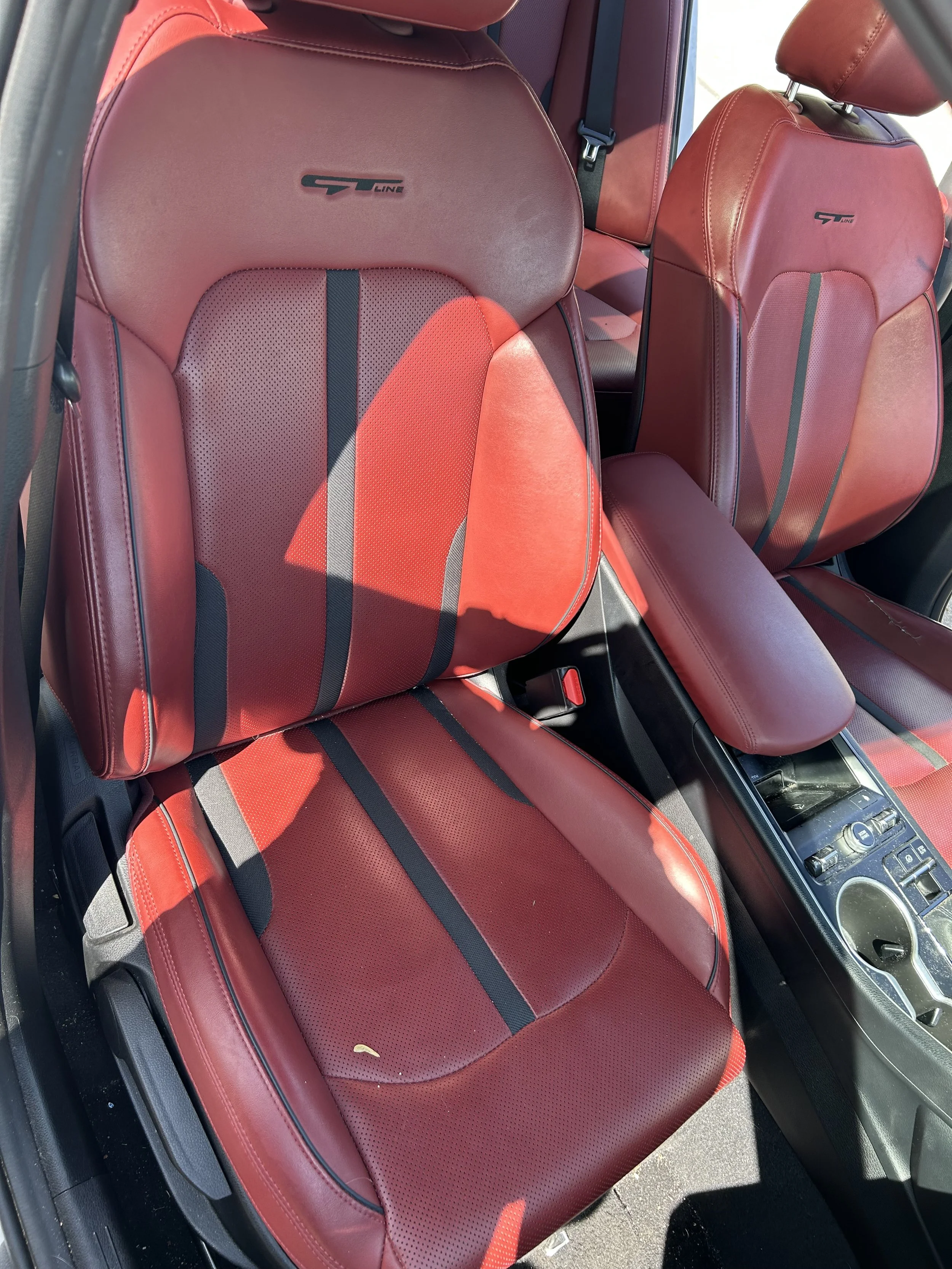
Leather Seat Cleaning
Begin With a Deep, Thorough Vacuum
Before applying any cleaner, you should gently vacuum the seats. If you skip this step, you grind dirt into the leather, scratching and stressing the surface. Every crumb, every piece of grit, and every small particle acts like sandpaper when rubbed in. Use a soft brush attachment and move slowly, especially around the seams where dirt collects. Proper vacuuming makes the cleaning process safer, smoother, and far more effective.
This is the same approach we use on every Full Interior Detail we perform—careful prep is half the battle.
Use a Safe Leather Cleaner (Never Household Products)
The biggest mistake people make is using the wrong cleaning solution. Household cleaners, baby wipes, vinegar, dish soap, and all-purpose sprays strip moisture from the leather and destroy its protective coating. They might make the seat look clean for a moment, but they create long-term damage that leads to cracking and discoloration.
A proper pH-balanced leather cleaner dissolves dirt without harming the leather fibers. Apply it gently, let it lift the oils and debris, and trust the product to do the work. Leather responds to patience far more than pressure.
This is the type of process we showcase during our Interior Detailing transformations—it’s slow, controlled, and intentional.
Agitate With a Soft Leather Brush or Microfiber Towel
Once the cleaner is applied, gently massage the leather with a soft brush or microfiber towel. The goal isn’t to scrub aggressively. It’s to loosen dirt from the grain without damaging the finish. Circular motions work well, but the real key is light pressure. You’re coaxing the dirt out, not forcing it out.
The moment the leather starts to release its buildup, you’ll see its original color appear again. This is when customers usually realize how dirty their leather truly was.
Wipe Away Contaminants Completely
After lifting the dirt, wipe everything down with a clean, dry microfiber towel. This detox step removes the grime and cleaner, revealing clean leather. If the leather still looks dull or dirty, repeat the cleaning process. Some seats require multiple passes, especially if they haven’t been cleaned in months or years.
Just like stain removal in our Seat Shampoo or Interior Deep Cleaning, patience delivers the best results.
Condition the Leather to Restore Softness and Protection
Cleaning leather removes dirt—but it also removes natural oils. Leaving the leather unconditioned is one of the fastest ways to create stiffness, cracking, and early aging. Conditioning rehydrates the fibers, softens the material, restores color richness, and protects the seat from UV exposure and temperature changes.
In Cleveland climate, conditioning isn’t optional. It’s essential.
A quality conditioner absorbs into the leather instead of sitting on top of it. When applied correctly, the seats feel supple, smooth, and renewed—not greasy. This is also what separates a professional-level result from DIY attempts. The conditioning step is where leather truly comes back to life.
Let the Leather Rest and Absorb Before Sitting
After conditioning, the seats need time to absorb the product. This allows the oils to penetrate deeper into the leather, strengthening the fibers and reinforcing the protective layer. Rushing this step reduces the effectiveness, so giving the leather even 15–30 minutes to breathe can make a huge difference in the final result.
Allowing the seats to rest ensures your conditioning lasts longer and works better—something that matters in a climate with Cleveland’s extreme temperature swings.
Maintaining Leather Seats for the Long Term
Leather ages beautifully when cared for—and terribly when neglected. To extend the life of your seats, clean them regularly, avoid parking in direct sunlight for long periods, and keep up with routine conditioning. Quick touch-ups can prevent deep cleaning sessions and expensive repairs later.
If you're dealing with cracking, deeply embedded dirt, or stains that seem impossible to remove, booking a professional Full Interior Detail is usually the best option. Specialists use steam, heated extractors, and professional-grade leather products that reach deeper than off-the-shelf cleaners ever can.
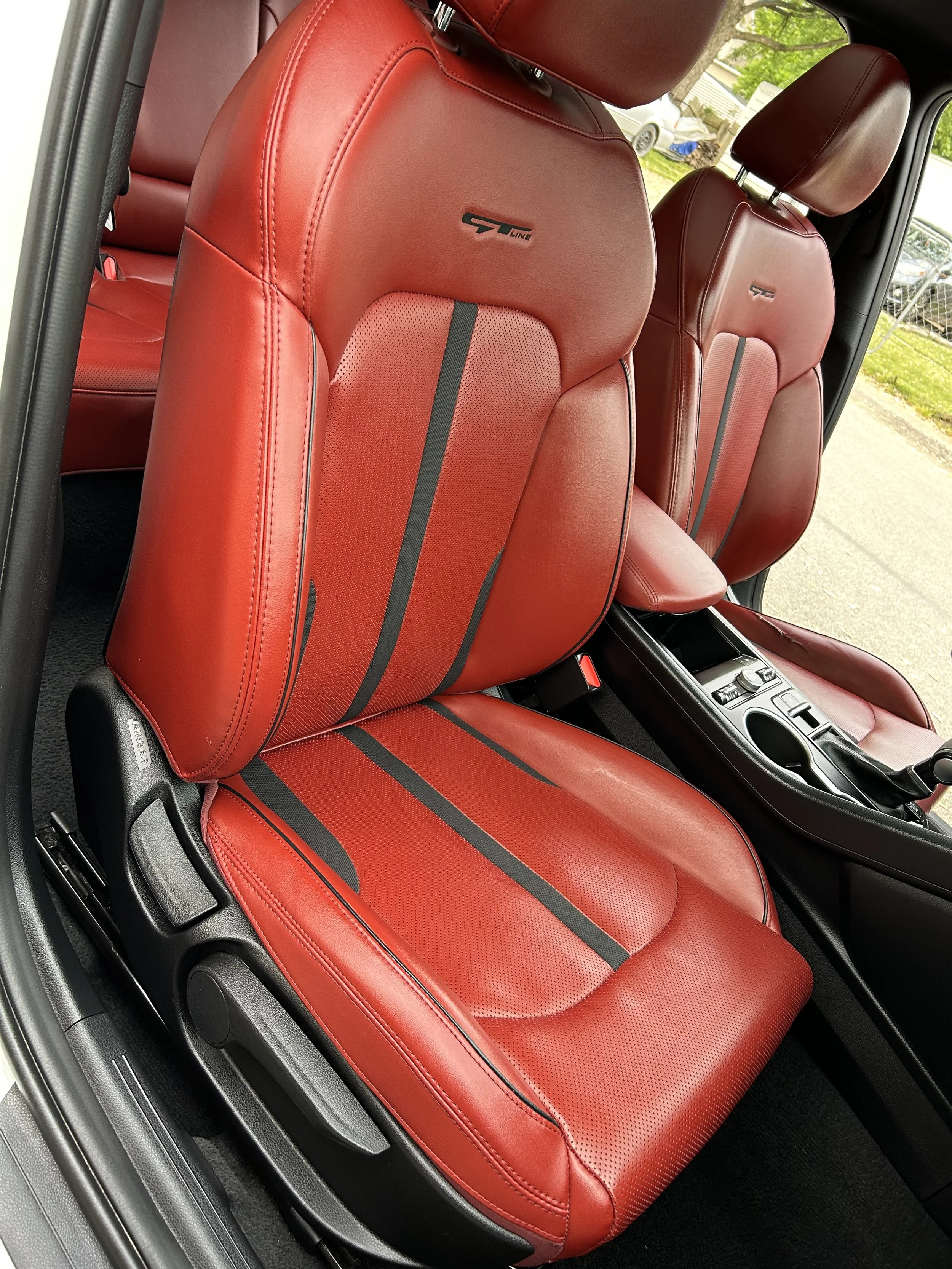
Leather Seat Cleaning
When to Get Professional Help
If your leather seats are stiff, heavily stained, or showing signs of aging, it might be time to let a professional restore them. Heavy body oil buildup, dye transfer, water damage, and deep grime require tools and products that most people don’t own. A trained detailer can safely revive the leather without damaging it.
Professional detailing is especially valuable before selling your vehicle. Clean, conditioned leather dramatically increases resale value and makes your car look newer, fresher, and more cared for.
Final Thoughts: Leather Seats Deserve Real Care
Your leather seats carry you through everything—morning commutes through Cleveland snowstorms, late-night drives home from work, park trips with your kids, weekend outings, and quiet moments when you just need a break. A clean, conditioned leather seat isn’t just nicer to look at. It changes how you feel when you drive. It adds comfort, pride, and a sense of calm every time you sit down.
Leather isn’t simply a material. It’s part of your experience inside your vehicle. It’s worth taking care of the right way.
If your leather needs the kind of restoration you can feel, schedule a Full Interior Detail and let us restore your seats with the same care and intention we bring to every car we touch.