How Winter in Cleveland Permanently Damages Your Car — And What You Can Do to Stop It Before It’s Too Late
Every winter in Cleveland feels like a battle — bitter cold, lake-effect snow, relentless salt, icy mornings, frozen doors, and roads that seem to stay wet for months straight. If you’ve lived here long enough, you know that winter doesn’t just test your patience… it destroys your vehicle little by little. One season might feel manageable, but it’s what those winters do over time that changes your car forever.
Customers often tell me, “My car never looks the same after winter,” and they’re right. Cleveland’s winters are uniquely harsh. The salt trucks run nonstop, dumping thousands of pounds of corrosive chemicals across I-480, I-90, 77, 71 and every side street in between. That salt doesn’t just sit on the road — it attaches to your paint, your wheels, your carpets, your undercarriage, and every part of your vehicle that it can cling to.
This isn’t ordinary dirt. It’s chemical contamination, oxidation, corrosion, and moisture damage happening all at once. And the worst part? Most of the damage is slow and silent. By the time you see it, the destruction has already been happening for months.
This blog explains exactly how Cleveland winter ruins your car and what you can do right now to stop it before it becomes permanent.
The Salt That Keeps You Safe is the Same Salt Destroying Your Vehicle
When salt hits your paint, it doesn’t simply sit on the surface — it embeds itself into the pores of your clear coat. Even when you wash your car, the residue often stays behind, slowly eating away at the finish. It causes microscopic scratches, oxidation, faded paint, and eventually little signs of rust around the wheel wells.
Inside the car, salt from boots and shoes melts into the carpets. When it dries, it leaves white, crusty buildup that stiffens the fabric and eventually creates a sour, mildew-like smell. Once that moisture sinks into the carpet padding, no surface wipe will remove it. Only professional full interior detail extraction pulls it out.
Salt damage is one of the biggest reasons Cleveland cars age faster than vehicles in most states.
Road Grime, Slush, and Chemical Residue Stick to Your Paint Like Glue
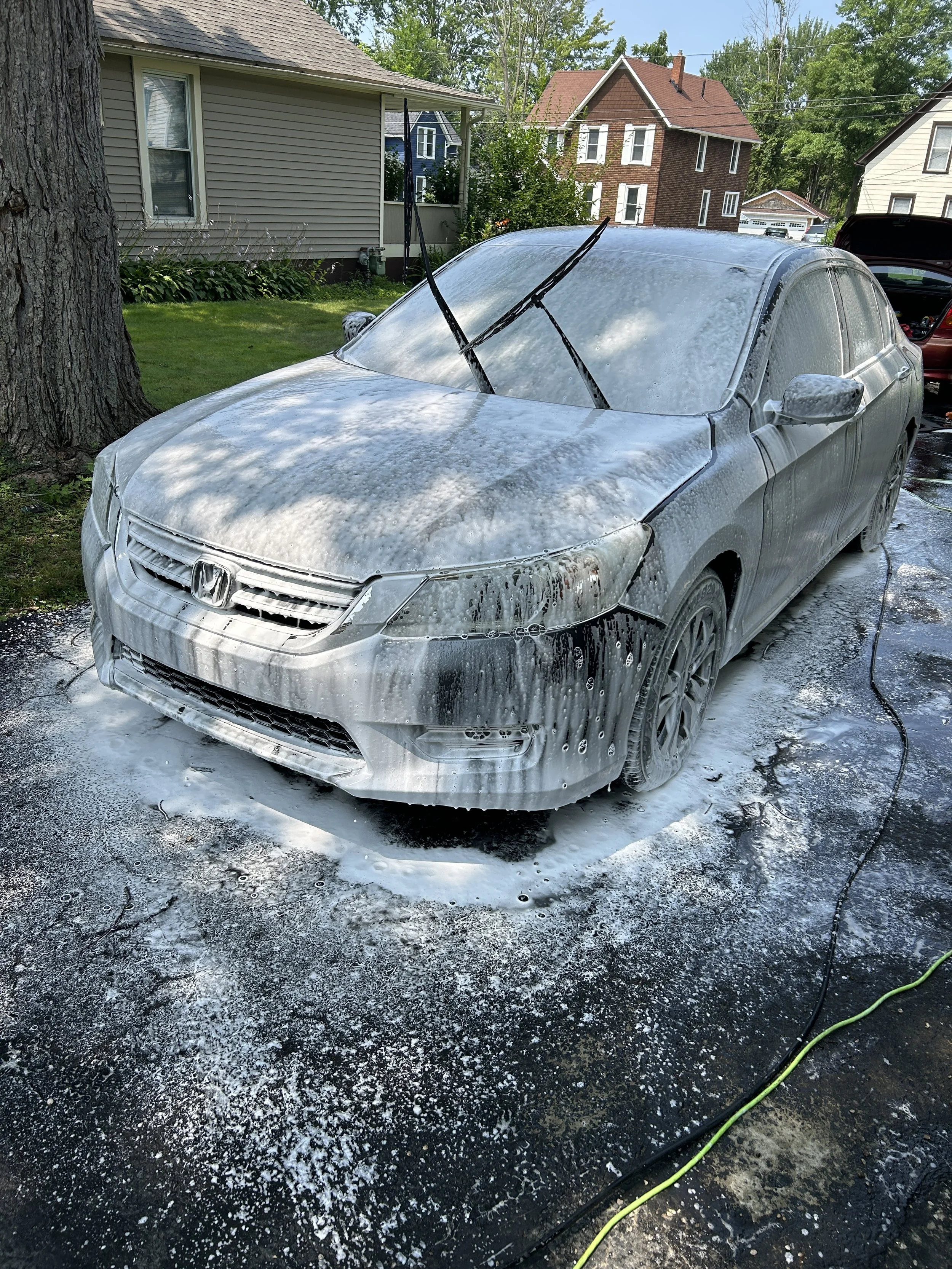
Winter grime is different from summer dirt. It’s sticky, heavy, and chemically aggressive. It creates a film that covers your vehicle and refuses to come off with a normal wash. This layer blocks your paint’s ability to shine because it sits between your clear coat and the light.
You can scrub it, you can drive through a car wash, you can rinse it — but real road film will not budge unless you use decontamination methods found in a professional exterior detailing service. Without removing that film, your car will always look “dirty” even after washing.
Cleveland’s Constant Freeze-Thaw Cycle Creates Permanent Paint Damage
One day it’s 50 degrees. The next day it’s 12. Then it rains, freezes, melts, freezes again, and snow starts falling sideways off the lake. This is normal life in Northeast Ohio. But your car’s paint isn’t built for that kind of stress.
Those temperature swings crack old protection layers, dry out your clear coat, and cause moisture to expand and contract underneath contaminants. That combination leaves your paint looking dull, chalky, and prematurely aged. The only true way to stop this cycle is to apply long-term protection like ceramic coating Cleveland, which seals your clear coat and shields it from weather stress.
Fog, Moisture, and Snow Melt Create Hidden Mold Inside Your Interior
Winter brings moisture into your car every single day — wet jackets, foggy windows, dripping shoes, melting ice, and breathing warm air into a cold cabin. That moisture settles deep into your carpets, seats, and even the foam beneath the upholstery.
Over time, that trapped moisture becomes the perfect breeding ground for hidden odors, mildew, and bacteria. Even if you vacuum, wipe surfaces, or spray fresheners, nothing changes. Your interior smells “old” because the problem is below the surface.
This is why winter cleanup often requires steam cleaning and shampoo and extraction to fully remove what has soaked into the materials.
Wheel Damage and Brake Dust Accelerate Dramatically in Winter
When salt mixes with brake dust and road grime, it turns into a corrosive paste that eats through clear coat on wheels. This is why Cleveland wheels get pitted, faded, or permanently stained so quickly in winter. Even high-end wheels are vulnerable.
The solution is regular winter maintenance and a protective barrier from a professional mobile detailing Cleveland service that cleans, neutralizes, and seals your wheels before corrosion sets in.
Why Your Car Looks Older Every Spring
Most people don’t notice winter damage while it’s happening. They notice it when the temperatures warm up. Suddenly the paint looks flat. The interior smells strange. The carpets have salt rings. The wheels look tired. The trim looks faded. And no matter how much you clean, the “winter look” doesn’t go away.
This isn’t neglect — it’s just how severe Cleveland winters are. The good news is that winter damage can be reversed if it’s caught early.
A paint revival through paint correction restores the gloss.
A wash and wax service removes contamination and adds protection.
A deep full interior detail removes hidden moisture and salt buildup.
A long-term ceramic coating prevents this cycle from repeating next year.
How to Protect Your Car Before Winter Ruins It Again
You can avoid most winter damage with the right preventative steps. The key is protecting your paint before the severe weather hits — or restoring it correctly after it happens. Once protected, your car stays cleaner longer, resists salt better, and no longer suffers through the freeze-thaw cycle.
Clean. Decontaminate. Protect. Maintain.
That’s the formula for surviving Cleveland winters without sacrificing your vehicle.
Your car doesn’t have to come out of winter looking older, duller, or more damaged. With the right care, it can look as good in February as it does in August.